
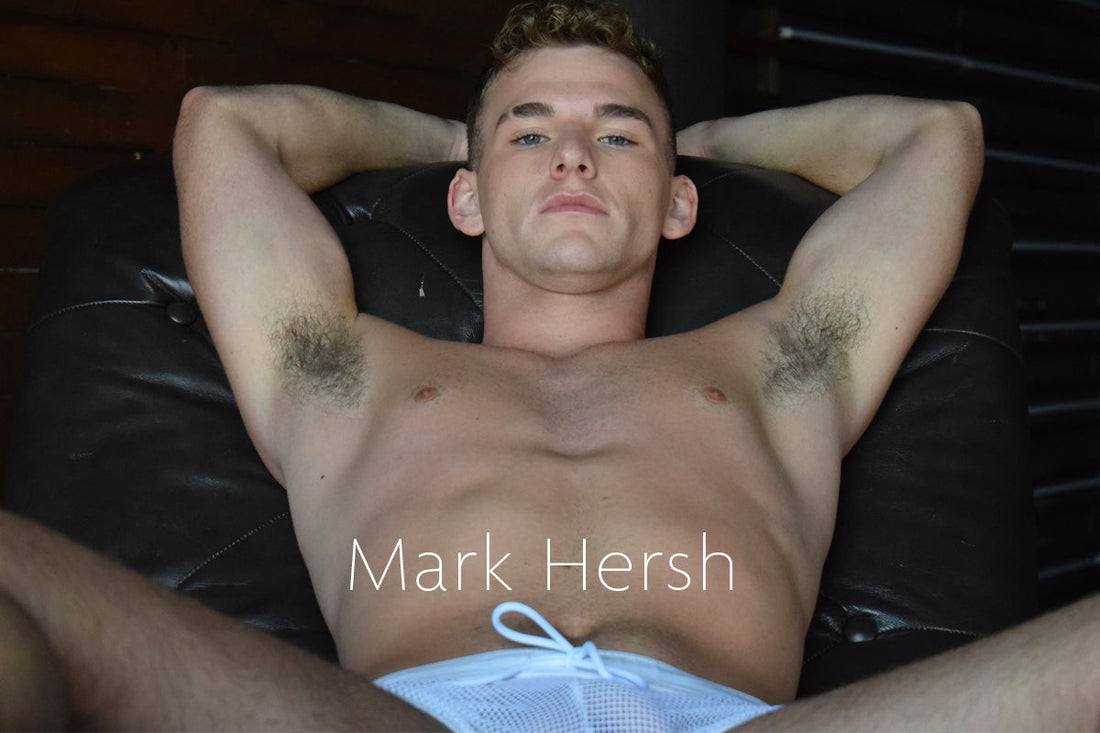
Unmasking Desire: Mark Hersh's Raw Vision of the Male Body in Queer Photography
Five years ago, Mark Hersh made a significant creative pivot. He abandoned the serene compositions and sweeping vistas of landscape photography to pursue something more visceral, more intimate, more charged with intention. Today, his work appears in the pages of Fuel Magazine's inaugural issue, a publication that boldly refuses the false binary between artistic integrity and erotic desire. Mark Hersh's presence in this debut marks not just a professional milestone, but a validation of a particular artistic philosophy, one rooted in authenticity, visual rigor, and an unflinching gaze at the male body.
The transition from landscape to the male form might seem unlikely at first. Yet for Mark Hersh, the journey was logical. Photography has always been about seeing, about observing the world with precision and intention. The difference is not in the medium or the technical skill, but in the subject matter. Where landscapes demand patience and an understanding of natural light, the male form demands something equally complex, something more charged with cultural weight and personal desire. Mark Hersh recognized this, and his work since that transition reflects an artist fully committed to mastering both the technical and philosophical dimensions of his new focus.

What Sets Mark Hersh's Work Apart From the Rest
What distinguishes Mark Hersh's approach is his commitment to authenticity. In an era where male body photography often veers toward hyper-stylization, artificial posing, and carefully constructed fantasy, Mark Hersh's work strives for something closer to truth. His stated goal, as noted in Fuel Magazine, is to make his subjects feel natural, unposed, as though we are glimpsing what might happen behind closed doors. This is not documentary realism, exactly. His photographs are carefully composed and intentionally lit. But the difference is one of tone, of intent. Mark Hersh seeks to capture men in states of ease, of vulnerability, of genuine presence rather than performance.
This distinction matters profoundly in queer male photography. The male body has been photographed thousands of times in commercial work, art photography, and adult content. But rarely has it been approached with Mark Hersh's particular combination of technical precision and humanizing vision. He is not interested in objectification for its own sake. His photographs acknowledge desire without reducing his subjects to objects. It is the work of a photographer who understands that you can celebrate a man's body, even fuel arousal through his image, while simultaneously preserving his dignity and humanity.

The Balance of Light and Composition
Lighting and composition are central to Mark Hersh's practice. He has spoken about the importance of these elements in adding dimension to his work. This is where his landscape photography background becomes evident. The way light falls across a body, how it reveals muscle and shadow, how a background either isolates or contextualizes his subject, these are decisions Mark Hersh makes with the deliberation of someone who has spent years learning how light itself can tell a story. In his photographs, backgrounds are not afterthoughts but active components of the visual narrative. They ground his subjects in the worlds they inhabit, suggesting place and lifestyle while maintaining focus on the human figure.

A Wide Variety of Men Before His Camera
Mark Hersh's portfolio reflects a wide range of collaborators. He has worked with top male adult performers, men whose bodies are honed for display, whose comfort in front of the camera brings a particular ease to the image-making process. But he has also worked with amateurs, with men who are coming to this kind of photography for the first time, who may feel vulnerable in front of the lens. This range reveals something important about Mark Hersh's practice. He is not chasing a particular body type or aesthetic. He is interested in men, in their individuality, in the specific character that each man brings to the image. Whether his subject is a professional or a first-timer, Mark Hersh's approach remains consistent, rooted in a desire to see and to reveal what he sees with honesty and artistic intention.
The choice to feature Mark Hersh in Fuel Magazine's debut issue situates him within a broader conversation about the state of queer male photography. The magazine itself was born from a simple insight, a recognition that there exists a false divide between art and sexuality, between photographs made for desire and photographs made for artistic contemplation. Fuel Magazine refused this division. It asserts that desire and artistic rigor are not opposing forces but complementary ones. By featuring Mark Hersh alongside other innovative photographers like Immortal By Nige, BATE CRUSH, and Ashton Jay, Fuel Magazine positions Mark Hersh as part of a vanguard of photographers who are expanding what is possible in contemporary queer male body photography.

The Grittiness of Los Angeles Brought to the Pages of Fuel Magazine
Mark Hersh's work in this context stands out precisely because of its grittiness. The Fuel Magazine editor describes Mark Hersh's visual vocabulary as gritty, featuring an unflinching precision and raw aesthetic power. This language suggests work that does not shy away from the male body in all its complexity. There is no glossiness here, no excessive filtering or digital manipulation designed to create an impossible ideal. Instead, Mark Hersh's photographs seem to document reality as he sees it, rendered with technical proficiency and artistic vision. The men in his photographs have bodies, real bodies, bodies that speak to who they are and how they live. When arousal arises from Mark Hersh's photographs, it does so in response to genuine human presence, not to an artificial perfection.
Los Angeles, where Mark Hersh is based, shapes his work in ways both obvious and subtle. The city itself has long been central to queer male culture in America. It is a place where desires can be explored, where communities form around bodies and sexuality. Mark Hersh's documentation of Los Angeles men, therefore, is also a documentation of a specific cultural moment, a specific geographic place where queer male life unfolds. His photographs are, in this sense, both deeply personal and culturally significant. They are portraits of individuals and documents of a community.

Mark Hersh and the Fuel Magazine Lineup
The inclusion of Mark Hersh in Fuel Magazine represents an important moment in contemporary photography. It signals that serious artistic photography about male desire is not only possible but necessary, that photographers who approach the male body with intention and rigor deserve platform and recognition. Mark Hersh's five years of focused work in this area have resulted in a distinctive visual language, one that honors both the desire and the humanity of his subjects. As Fuel Magazine continues to evolve and feature new photographers in subsequent issues, Mark Hersh's appearance in this inaugural edition establishes him as someone working at the forefront of a crucial artistic conversation.
For those interested in experiencing Mark Hersh's work firsthand, Fuel Magazine Issue 1 provides an extended look at his practice, including interview material and extensive photographic pages. The magazine is a limited print run, with only 250 copies produced, making it a collectible object as well as an artistic statement. This scarcity, too, reflects a commitment to intentionality and care that extends beyond the photographs themselves. Fuel Magazine, like Mark Hersh's approach to photography, refuses the infinite scrolling of digital culture in favor of something tactile, something you hold, something worth returning to.
Mark Hersh's Social Media & Online Presence
Instagram: @MarkEHershPhotography www.instagram.com/MarkEHershPhotography


