
Light, Shadow, and the Sacred Body: Sergio Daniel Rodrigo in Inspiró Issue Four
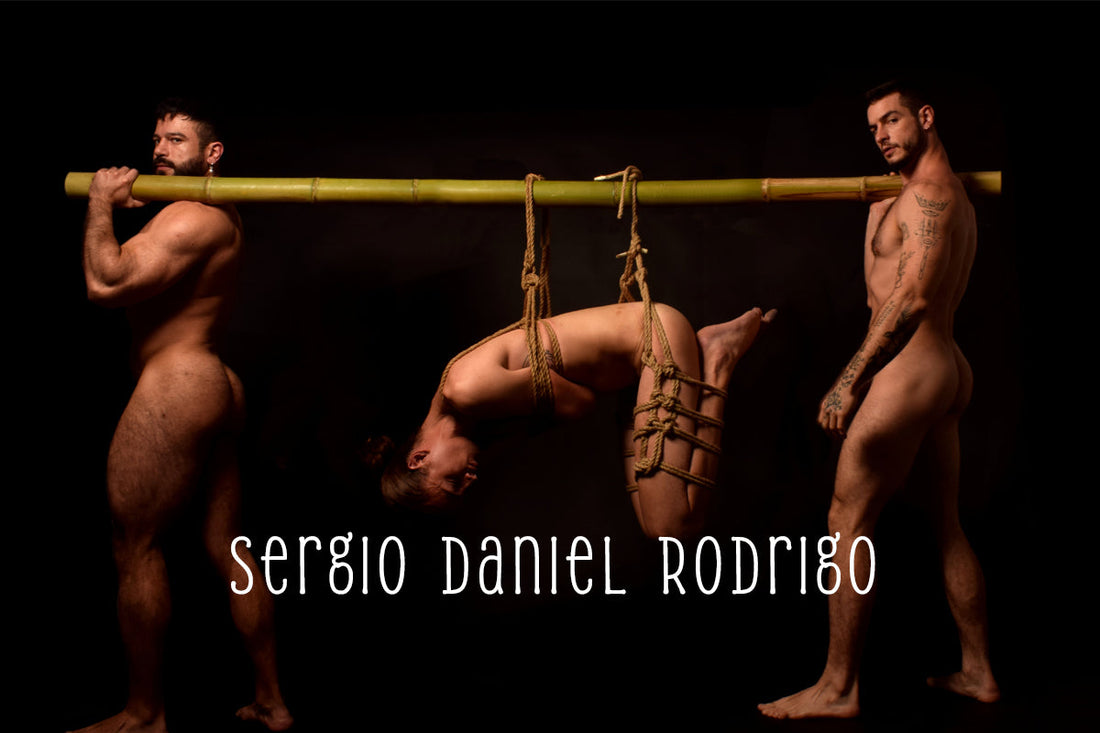
There are photographs that stop time. Not through spectacle or provocation, but through a quality closer to devotion, the sense that every element within the frame has been considered, weighed, and placed with care. The studio work of Argentine photographer Sergio Daniel Rodrigo belongs to this rare category. His images do not simply depict the human body. They consecrate it.
Rodrigo is a student of the Bachelor of Visual Arts at the National University of Cuyo in Mendoza, Argentina, and by trade he is a cabinetmaker and antique restorer. It would be easy to treat these facts as biographical footnotes. They are, in truth, the very foundation of his artistic vision. A craftsman who works daily with aged wood and inherited form, who understands the dignity of things made slowly and with intention, this is the sensibility that permeates every image he makes. His photography is not impatient. It is built.

The Old Masters, Reclaimed
His artistic references read like a syllabus in the history of European painting: the masters of the baroque, the tenebrists, and more recently the painters of French realism. When he turns to the studio, he gravitates toward the neoclassical, toward the world of Jacques-Louis David, where the nude body becomes a site of exaltation rather than exposure. Line, shape, volume, the architecture of flesh rendered in light and shadow: these are the terms in which Rodrigo thinks.
Tenebrism, the dramatic technique most closely associated with Caravaggio, uses profound darkness not as absence but as pressure, the light it yields seems all the more luminous, all the more alive, for the weight of the black surrounding it. One look at Rodrigo's studio work confirms how deeply this sensibility has shaped him. His backgrounds are often absolute. His subjects emerge from them the way saints emerge from the darkness of old altarpieces: as though the light were choosing them.
The photograph shared here, a composition of four figures arranged around a central body draped in crimson, is instructive in every detail. The grouping recalls the great deposition scenes of Renaissance painting, those images of bodies received, supported, and mourned. The red cloth functions as both garment and wound, as symbol and formal element. The faces carry an emotional register that ranges from grief to tenderness to something approaching awe. And all of it is held together by light that falls precisely, never by accident.

A Queer Vision Rooted in Tradition
What distinguishes Rodrigo's relationship to this classical inheritance is not simply technical fluency but the particular body he places at its center. The long tradition of the academic nude was constructed around ideals that often excluded as much as they celebrated. Rodrigo inherits the form but populates it differently, with queer bodies, with softness alongside strength, with an intimacy between figures that classical painting rarely permitted itself to be so honest about.
This is not appropriation of tradition but its continuation. The baroque was always, in part, about bodies in extremis, about ecstasy and suffering rendered inseparable. Rodrigo understands this. His work locates queer experience within the longest available history of art, insisting, quietly, elegantly, without polemic, that it was always there.
Among the photographers he most deeply admires are Aurelio Monge, Andrea Galad, Enrique Toribio, Ron Amato, and Carlos Quezada: artists whose own practices span a spectrum from classical portraiture to intimate documentary, and who share a commitment to the dignity of their subjects. The company Rodrigo places himself in reveals his ambitions clearly.

Between Studio and Landscape
Rodrigo works in two registers. In the studio, the world contracts to essentials: the body, the light, the cloth, the dark. Outdoors, he is interested in a different tension, the relationship between the human figure and the landscape that contains it. Sometimes the body becomes small against the world. Sometimes it becomes the protagonist. The same intelligence is at work in both contexts, but the studio is where his classical training speaks most directly, and it is his studio work that appears in the pages of Inspiró.
Inspiró Issue Four
Inspiró Magazine, published by The Male Muse, is one of the most considered publications dedicated to queer erotic art and male beauty in print today. Issue Four marks an anniversary, 112 pages, twelve international artists, each contributing to a visual conversation about desire, identity, and the male form. The curation is deliberate and the production values are exceptional, printed on premium matte art stock in a format that treats photography as the fine art it is.

Sergio Daniel Rodrigo is among the twelve artists featured, and his presence brings a quality that is rare in any publication: genuine historical gravity, worn lightly. His photographs do not ask to be explained. They ask to be looked at, slowly, the way one stands before a painting in a quiet gallery.
Issue Four is available now from The Male Muse at themalemuse.store. A digital edition is also available for those outside Europe.
Follow Sergio Daniel Rodrigo on Instagram at @sergiorodrigoart and on Bluesky at @sergiorodrigoart.bsky.social.


